The Up-rise of Christian Live Stream
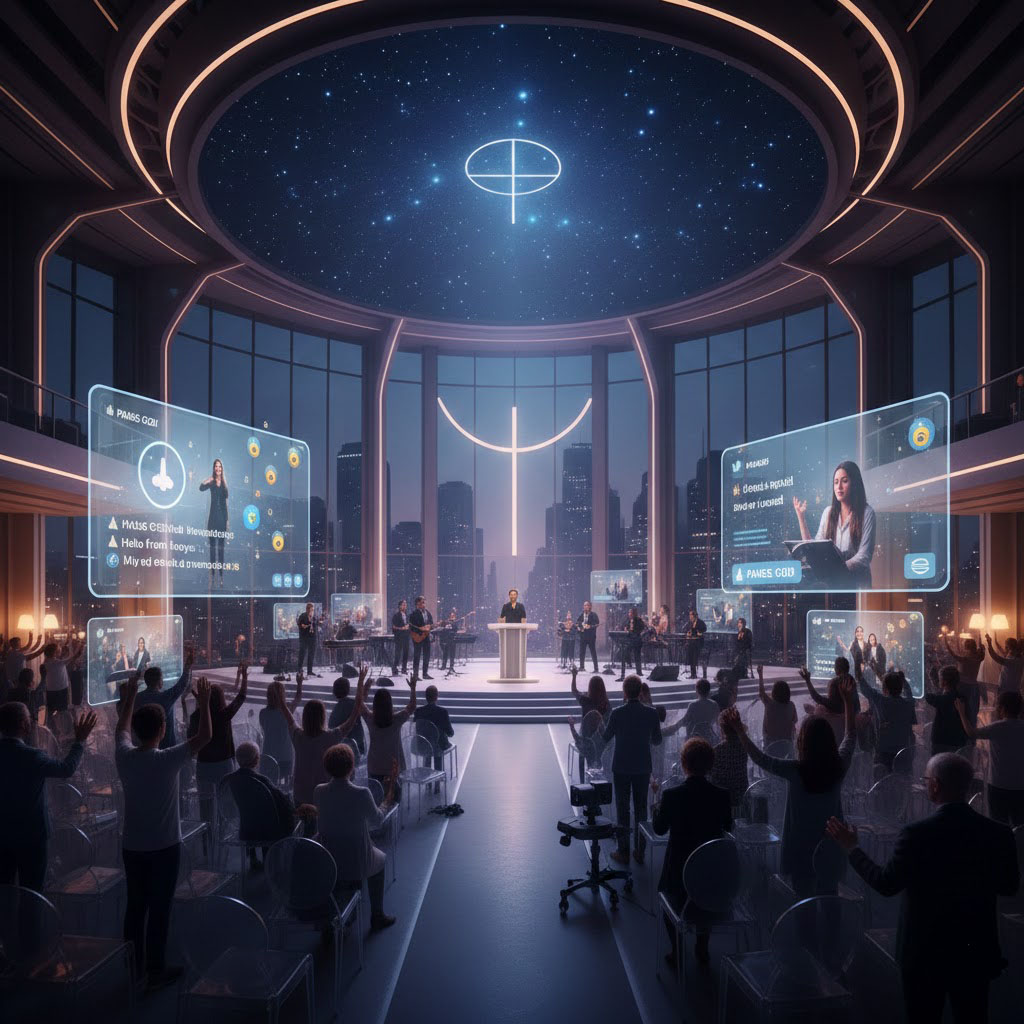
In the rapidly evolving landscape of 2026, the “digital front door” of the church has officially been replaced by a permanent digital residence. What began as an emergency pivot during the 2020 pandemic has transformed into a sophisticated, billion-dollar industry that is fundamentally reshaping how faith is practiced and shared globally. The up-rise of Christian live streaming is no longer just about watching church from a couch; it is a movement toward hybrid worship and digital discipleship that bridges the gap between the physical and the virtual worlds.
The Christian streaming market has seen explosive growth, moving from a niche service to a primary medium for spiritual engagement. Experts estimate the market has reached a staggering $2.2 billion in 2026, with projections suggesting it could top $3.5 billion by the early 2030s. This isn’t just a financial metric; it is a behavioral shift. Approximately 25 million Americans now attend church online, either as their primary mode of worship or as part of a “phygital” schedule. Interestingly, online views have become the leading predictor of whether a physical church will grow or shrink, as most new members now “vibe check” a community digitally before ever stepping foot inside a sanctuary.
Several cultural and technological factors have converged to make this the year of the Digital Reformation. For younger generations, spiritual formation is increasingly happening through social media algorithms that blend live-streamed sermons with short-form devotionals. Furthermore, live streaming has demolished physical barriers, providing a sanctuary for the homebound, the deployed, and the neurodivergent who require controlled environments to worship comfortably.
The technology powering these streams has moved far beyond the glitchy webcams of the past. By 2026, even mid-sized churches utilize high-fidelity audio and interactive tools like real-time prayer request buttons and integrated giving portals. Many ministries have even begun using AI for instant translation, allowing a single sermon to reach a global audience in multiple languages simultaneously. This professionalization has turned the “broadcast” into an immersive experience where “bad audio” is seen as a closed door to the Gospel.
However, this rise is not without its critics. Theological concerns have surfaced regarding the potential for worship to become a commodity rather than a communal experience. Church leaders are currently navigating the tension of the screen, trying to maintain the raw humanity of a service while meeting the high production standards expected by modern audiences. The challenge for 2026 and beyond is ensuring that the digital encounter remains a source of genuine connection rather than just another form of entertainment.
Ultimately, the trend for 2026 shows a quiet revival occurring online. While some traditional metrics of religion may be shifting, individual commitment is rising among those who engage with these digital tools. The church is no longer defined by four walls but is instead a global network of streams, chats, and digital connections.