[vidapi_day_generator]
The New Frontier of Corporate Communication
1: The New Frontier of Corporate Communication
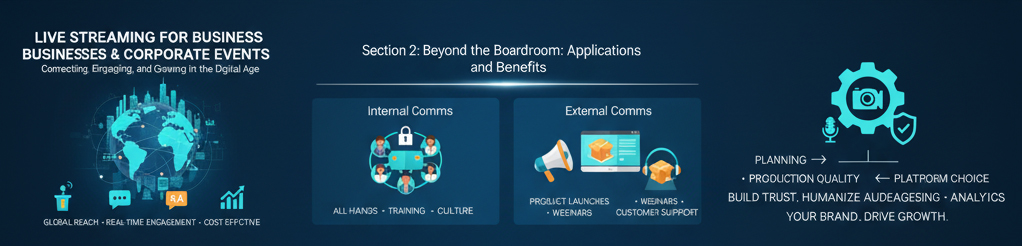
Live streaming has evolved from a tool for individual creators and influencers to an essential component of modern business strategy. In a globalized, remote-first world, companies are no longer limited by physical location when it comes to communication. Live streaming allows businesses to connect with a dispersed workforce, engage with customers, and host large-scale events with unprecedented reach. It’s a powerful medium that injects authenticity and immediacy into corporate messaging, fostering a deeper sense of connection and transparency.
Unlike pre-recorded video, a live stream has a sense of urgency and real-time engagement that captivates an audience. This immediacy is crucial for communicating important announcements, such as quarterly reports, product launches, or company-wide town halls. The ability to host live Q&A sessions, polls, and interactive chats transforms passive viewing into an active, two-way conversation. This not only keeps the audience engaged but also provides valuable, real-time feedback that can be used to inform future business decisions. For many organizations, live streaming has become a cost-effective alternative to traditional events, eliminating the expenses associated with venue rental, travel, and logistics while expanding the potential audience exponentially.
2: Beyond the Boardroom: Applications and Benefits
The applications of live streaming for businesses are vast and varied. For internal communications, it’s a game-changer. Companies can host all-hands meetings and leadership addresses that feel personal and direct, regardless of whether employees are in the office or working from home. This is particularly vital for building a cohesive company culture and ensuring every team member feels included and informed. By providing a secure, password-protected stream, businesses can maintain confidentiality for sensitive internal discussions.
Externally, live streaming is a powerful marketing and sales tool. Product launches can be streamed to a global audience, building excitement and generating buzz on a scale previously reserved for major brands. Webinars and professional workshops can be offered as live events, with viewers signing up in advance to secure their “spot.” This creates a sense of exclusivity and provides a captive audience for your content. Furthermore, live streams can be used for training and customer support, allowing experts to demonstrate a product or answer common questions in real time. The resulting videos can then be repurposed as on-demand content, extending their value long after the live event has concluded.
3: The Strategic Imperative and Key Considerations
Adopting live streaming as a core business practice is a strategic imperative for any company looking to stay relevant and competitive. The benefits—from increased engagement and brand awareness to cost savings and broader reach—are undeniable. However, success requires careful planning and the right tools. Companies must choose a streaming platform that aligns with their goals, whether that’s a simple, user-friendly service for internal meetings or a robust, professional platform for large-scale public events. Factors like security, analytics, and platform integrations are crucial considerations.
A successful corporate live stream goes beyond simply pressing “go live.” It involves thoughtful content creation, professional production quality, and a clear understanding of the target audience. Even if it’s a small-scale event, investing in quality audio and video equipment can make a world of difference in how a brand is perceived. Ultimately, live streaming is more than just a broadcast; it’s an opportunity to humanize a company, build trust with stakeholders, and forge authentic connections in a way that traditional corporate communication methods simply cannot. It is a powerful, dynamic medium that has permanently reshaped the way businesses operate and interact with the world.
7 Good Reason Why Simulated Live Streaming Work
What is Simulated Live Streaming?
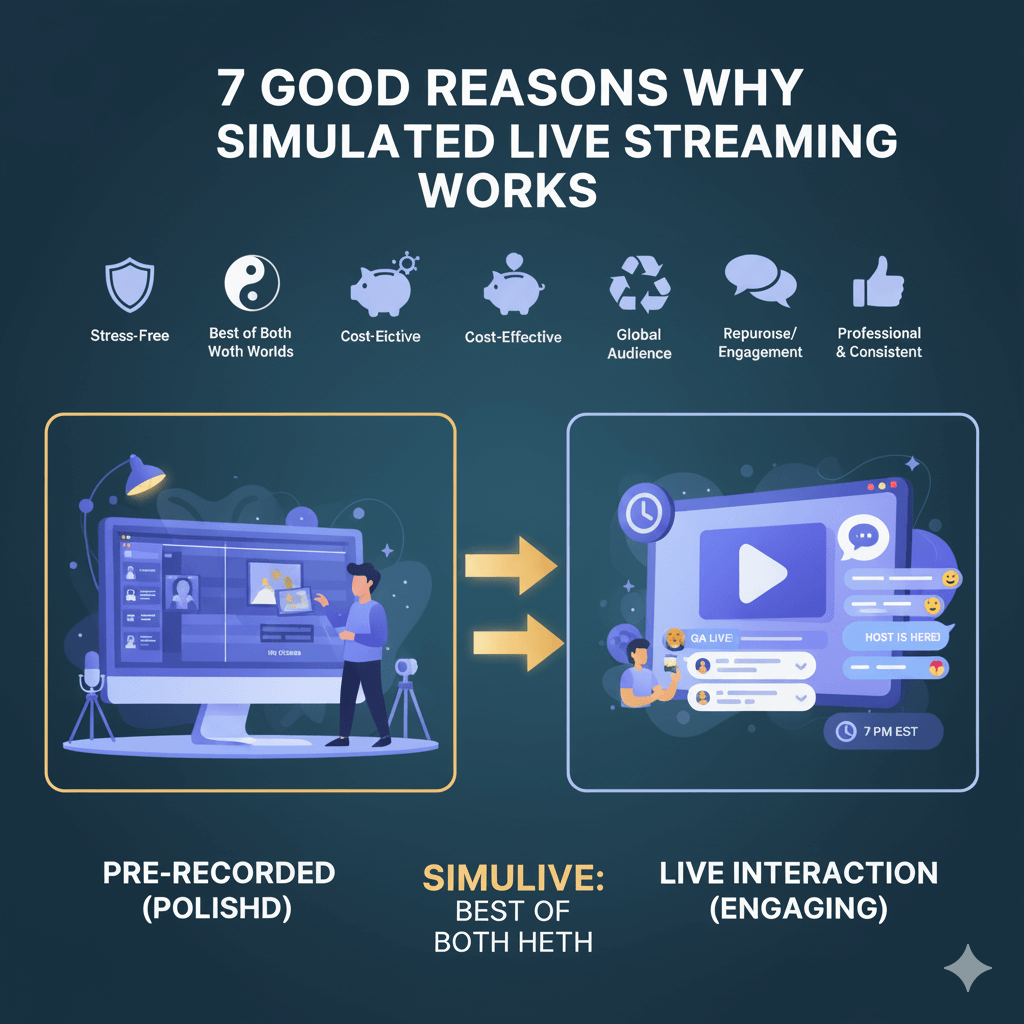
Simulated live streaming, or “simulive,” is a method of broadcasting pre-recorded video content as if it were happening in real time. It combines the polish and control of a pre-recorded video with the interactive elements and urgency of a live event. The content is played at a scheduled time, and viewers can interact with each other and with the host (who is usually present in the chat) as the video plays.
7 Reasons Why Simulive Streaming Works
- It’s Easy and Stress-Free
Live broadcasting can be nerve-wracking. Technical glitches, unexpected interruptions, and on-camera mistakes are always a risk. With simulive, you can record and edit your content in advance, ensuring everything is perfect. This eliminates the stress of a live broadcast and allows for a more polished presentation.
- You Get the Best of Both Worlds
Simulive events offer the convenience of on-demand content with the engagement of a live broadcast. The scheduled start time creates a sense of urgency and FOMO (Fear Of Missing Out), encouraging viewers to tune in. Yet, the host can be active in the chat, answering questions and interacting with the audience in real-time, creating a sense of community and connection.
- It’s Cost-Effective
Producing a high-quality live stream often requires expensive equipment, a strong internet connection, and a dedicated production team. With a simulive stream, you can use more basic equipment to record the video and then use your existing platforms to schedule and broadcast it. This makes high-quality content more accessible to businesses and creators on a budget.
- You Can Reach a Global Audience
Scheduling a live event can be tricky when your audience is spread across different time zones. With simulive, you can schedule the same pre-recorded event to play at different times, effectively reaching a global audience without having to be “live” at all hours of the day.
- You Can Repurpose and Monetize Content
The pre-recorded nature of simulive content makes it incredibly easy to repurpose. You can edit the video into smaller clips for social media, turn the audio into a podcast, or even sell the full recording as an on-demand course. This gives your content a longer shelf life and more potential for monetization.
- It Enhances Audience Engagement
By playing a pre-recorded video, the host is freed up to engage directly with the audience in the chat. They can answer questions, respond to comments, and moderate the conversation in real time. This focused engagement can lead to a more personal and interactive experience for viewers, strengthening the bond between creator and audience.
- It Provides a Professional and Consistent Experience
When you record your content in advance, you can ensure consistency in quality. Lighting, sound, and visual effects can be perfected before the broadcast. This professionalism builds trust and credibility with your audience, making them more likely to return for future events.
The Growth of Live Streaming
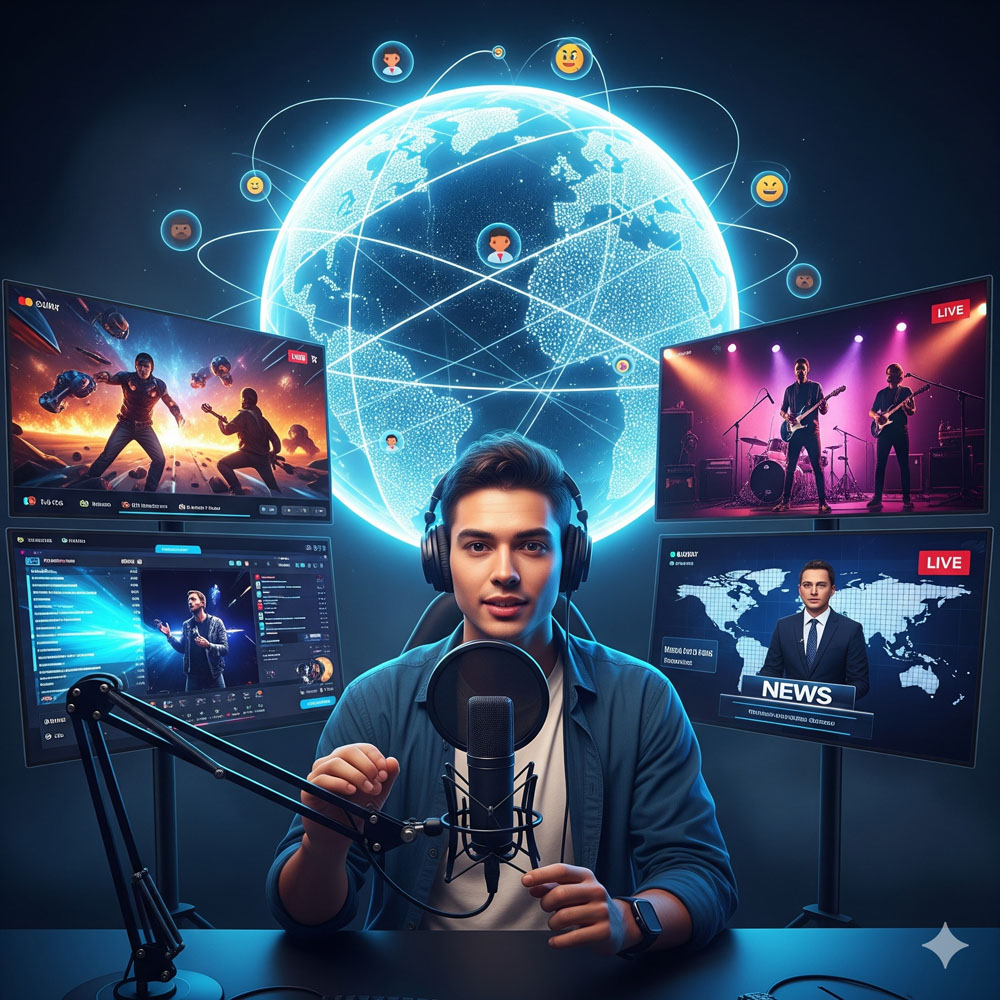
The landscape of digital media has undergone a profound transformation, and at the heart of this evolution is the explosive growth of live streaming. Once a niche activity for a select few, live streaming has become a global phenomenon, reshaping how we consume content, engage with communities, and even conduct business.
The roots of live streaming can be traced back to the early days of the internet in the 1990s, with pioneering attempts to broadcast real-time audio and video. However, it was the rapid advancements in internet infrastructure, particularly the widespread adoption of broadband and later 4G and 5G mobile networks, that truly unlocked its potential. Platforms like YouTube and Twitch emerged as catalysts for this growth, democratizing the ability to broadcast to a global audience.
Today, the live streaming market is a multi-billion dollar industry, and its growth trajectory shows no signs of slowing down. Analysts project the market to continue its rapid expansion, driven by a confluence of factors. The increasing penetration of smartphones and other mobile devices has made live content more accessible than ever, allowing people to tune in from anywhere, at any time. Furthermore, the integration of live streaming features into major social media platforms like Facebook, Instagram, and TikTok has brought the technology to an even broader user base, making it a ubiquitous part of the digital experience.
What sets live streaming apart from traditional video on demand is its inherent sense of immediacy and authenticity. Viewers are drawn to the real-time, unscripted nature of live broadcasts, which fosters a deeper sense of connection and community. This has made live streaming a powerful tool for various sectors beyond gaming and entertainment. For example, live shopping has gained immense traction, particularly in Asia, as brands leverage live broadcasts to showcase products and interact with customers directly. In the world of news and events, live streaming provides a direct, unfiltered view of breaking stories and special occasions. The COVID-19 pandemic further accelerated this trend, with live streaming becoming a vital tool for virtual conferences, online education, and concerts.
Looking ahead, the future of live streaming is poised to be even more innovative and interactive. Advancements in artificial intelligence (AI) are already enhancing the viewer experience through features like automated content moderation, personalized recommendations, and AI-powered video enhancement. The convergence of live streaming with technologies like virtual and augmented reality promises to create even more immersive and engaging experiences. As the line between creator and audience continues to blur, live streaming will remain a crucial medium for fostering genuine connection, building communities, and shaping the future of digital content.
The Power of the Clock: 12 Benefits of Getting Scheduled on a Grid Live Streaming Platform

In the fast-paced world of digital content, live streaming has become an essential tool for creators, businesses, and organizations to connect with their audience in real-time. While many platforms offer the ability to “go live” at a moment’s notice, there is a distinct advantage to getting scheduled on a “grid” or “channel” live streaming platform. These platforms operate more like traditional television networks, with a pre-set schedule of shows and events. For content creators, this structured approach offers a host of benefits that can lead to greater visibility, audience growth, and long-term success.
Here are 12 benefits of being scheduled on a grid live streaming platform:
1. Consistent Audience Expectation
A scheduled time slot creates a routine for your viewers. They know exactly when and where to find you, which builds consistency and makes it easier for them to incorporate your content into their daily or weekly habits. This predictability is a key factor in building a loyal, returning audience.
2. Built-in Discoverability
Platforms with a grid schedule often feature a “what’s on now” or “upcoming shows” section. This automatically places your content in front of a new audience that is actively browsing the platform’s schedule, increasing your chances of being discovered by viewers who may not have found you otherwise.
3. Enhanced Promotion and Marketing
Having a set schedule gives you a concrete event to promote. You can advertise your stream with a specific date and time, creating a “save the date” moment for your followers. This allows for more effective pre-stream marketing campaigns across social media, email newsletters, and other channels.
4. Professional and Credible Image
Being part of a curated schedule on a platform lends an air of professionalism and credibility to your brand. It signals that your content has been vetted and is considered a valuable part of the platform’s lineup, which can attract a more serious and engaged audience.
5. Increased Viewer Retention
Viewers who tune in to a scheduled stream are often more dedicated to watching a full episode or segment. The “appointment television” model encourages them to stay for the entire duration, unlike spontaneous streams where viewers may drop in and out.
6. Better Planning and Production
A scheduled slot forces you to plan your content in advance. This structured approach allows you to organize your show, prepare visuals, and test equipment, leading to a higher quality broadcast with fewer technical glitches.
7. Monetization Opportunities
Many scheduled platforms offer robust monetization options, such as ad breaks and sponsorships, that are built into the grid format. This provides a more predictable and reliable revenue stream compared to relying on donations or individual subscriptions.
8. Access to Analytics and Data
Scheduled platforms often provide detailed analytics about your stream’s performance. You can analyze viewer numbers, watch time, and audience demographics to understand what content resonates most with your audience, allowing you to refine your strategy for future broadcasts.
9. Collaborative Opportunities
Grid platforms often bring together a community of creators. Being part of a scheduled lineup can lead to cross-promotion and collaboration with other streamers, expanding your reach to their audiences and creating mutually beneficial relationships.
10. Evergreen Content Creation
Live streams on a scheduled platform can be easily repurposed. The recorded broadcasts can be archived and made available as on-demand content, extending the value of your work far beyond the initial live broadcast. You can also create highlights or clips for use on other social media platforms.
11. Streamlined Technical Workflow
Many platforms that operate on a grid system have a streamlined technical workflow. You simply ingest your stream to a persistent server, and the platform’s backend automatically handles the transition between different shows, reducing the need for manual switching and technical overhead.
12. Community Building
A consistent schedule fosters a sense of community among your viewers. They can gather and interact in the chat at a specific time each week, building stronger connections with each other and with you, the creator. This dedicated community is a powerful asset for any content creator.
In conclusion, while the freedom of unscheduled live streaming is appealing, the strategic benefits of a scheduled grid platform are undeniable. By embracing a more structured approach, content creators can build a more engaged audience, create a more professional brand, and unlock a more sustainable and successful future in the world of live streaming.